ImpactitesDifferent Types of ImpactitesHere are examples of several basic types of impactites. An impactite is a rock formed by meteorite, asteroid, or comet impact on Earth. Impactites are usually composed mostly of material from the impact site, often called target rock. This material often suffers shock metamorphosis, which happens when a high-pressure shock wave goes through target rock. The pressure may be as high as over 400 GPa at the impact point. This is enormous pressure. By comparison, volcanic and tectonic events on Earth generally produced pressures below 1 GPa. An impactite may also contain some anomalies, extraterestrial materials, such as iridium (Ir). Text edited by Richard Dreiser. |
|
Projectile |
|
|
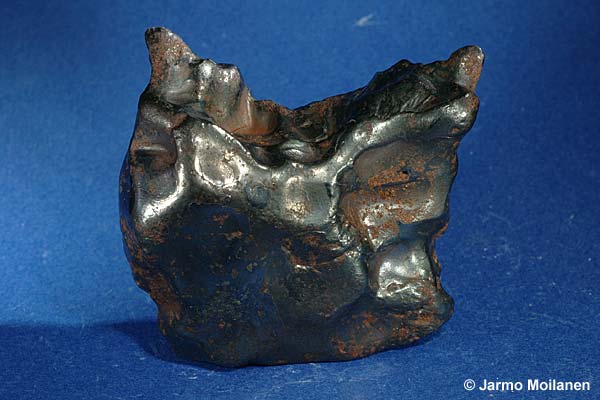
Projectiles are not impactites. A projectile is a celestial body that impacts Earth and excavates a crater. There are two major groups of projectiles: asteroids and comets. Asteroids are composed of rock, and comets are more or less ice. Meteorite variations provide evidence of different kinds of asteroids.
Sample: a 163 gr Sikhote-Alin iron. Sikhote-Alin irons are portions of the iron body which impacted in Eastern Russia in 1947. Impact site has lots of smaller crater. Largest crater was 26 meters wide. |
Impact glass |
|
|
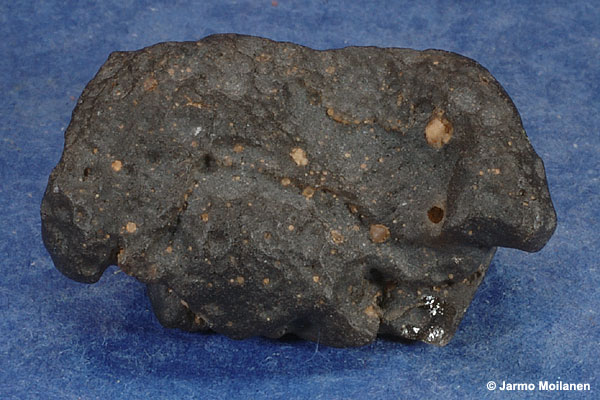
Impact glass is formed when impact melt rapidly cools down. These and other similar impact products are often called impactites.
Sample: impact melt glass from Aouelloul, Mauritania. |
Impact melt |
|
|
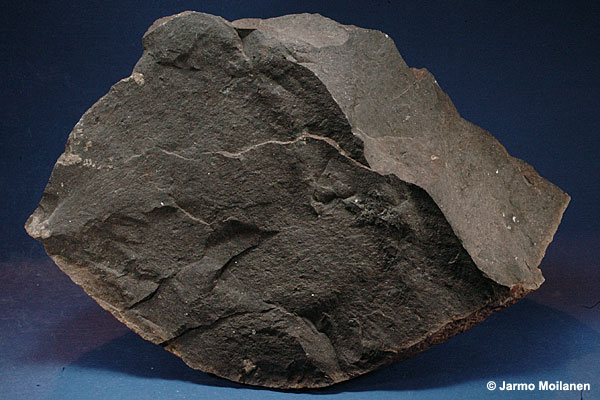
Impact melt is a clast-free melt that cooled down slowly. The slow cooling produce a crystalline structure. Impact melts can resemble certain igneous rocks.
Sample: dark impact melt from Sääksjärvi structure, Finland is almost clast free. |
Melt matrix breccia |
|
| [image missing] |
Most impact melts are melt matrix breccias. That means the rock matrix is impact-produced melt with a lots of clasts.
Sample: melt matrix breccia from Charlevoix, Canada |
Suevite |
|
|
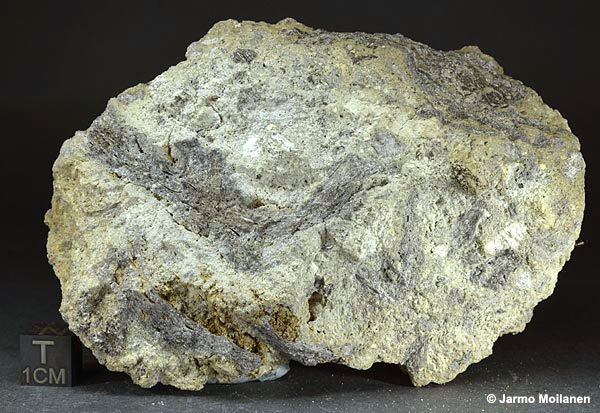
Suevite is formed in material ejected into air by an impact. It usually has some melt droplets or veins within lithic matrix. There are primarily two kind of suevites: fall-back suevite and fall-out suevite. Fall-back suevite fell back into the crater, and fall-out fell outside the crater rim.
Sample: fall-back suevite from Ries, Germany. The darker veins are glass. |
Lithic breccia |
|
| [image missing] |
Lithic breccia has practically no melt.
Sample: monomict Gardnos breccia from Gardnos, Norway |
Dyke breccia |
|
| [image missing] |
Dyke breccia is usually lithic breccia found as a dykes in the bedrock below the crater.
Sample: lithic polymict dyke breccia from Söderfjärden, Finland |
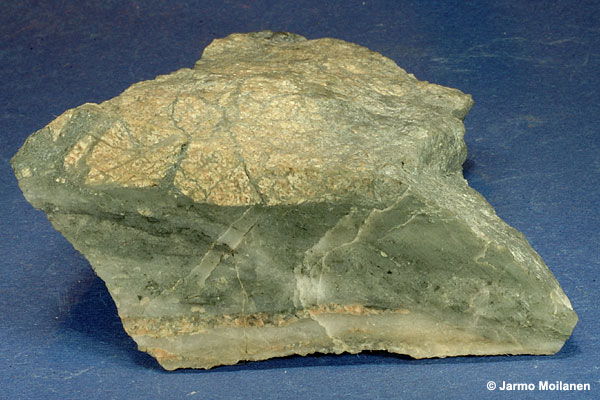
Pseudotachylite |
|
|
Pseudotachylite is term used frequently and often inapproproately. It is friction melt usually found as dykes in bedrock below the
crater.
Sample: pseudotachylite from Rochechouart, France. |
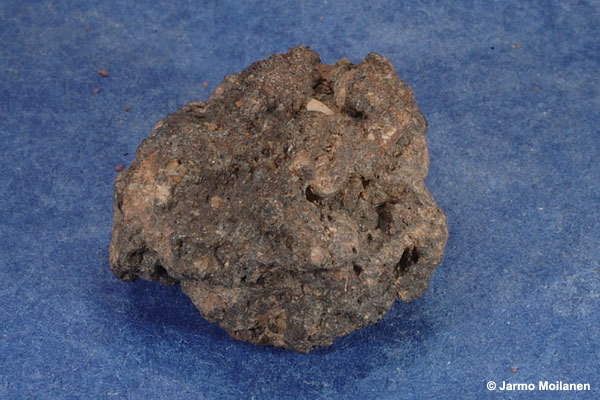
Impactite |
|
|
When I usually talk about impactites, I mean all rocks formed from impacts. However, some material from small and fresh craters is often called impactite. This material is combination of melted target rocks and projectiles, or is made of pure glass (see impact glass, above). Some of this material contains quite a bit of the projectile. Because the melt has cooled down rapidly, it usually has a glassy matrix.
Sample: impactite from Monteraqui, Chile. |
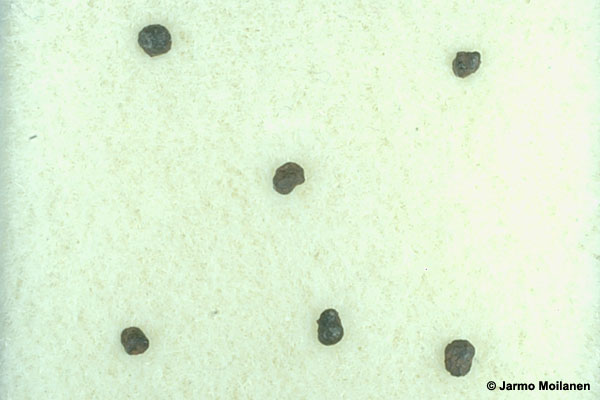
Spherules |
|
|
Spherules are odd, small teardrop-shaped or spherical material associated with fresh craters. They are usually formed from melt droplets or by condensation of the vaporized projectile or target rocks.
Sample: spherules from Barringer crater (the Meteor Crater), USA |
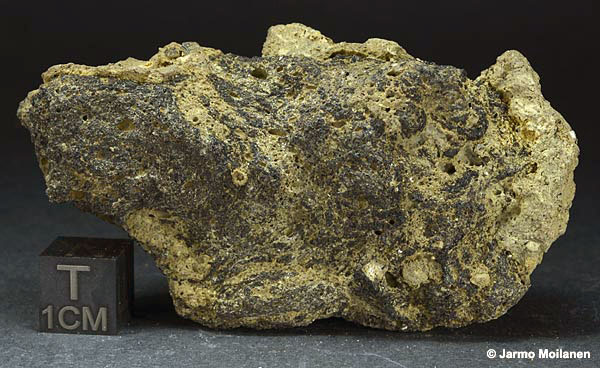
Melt bombs |
|
|
Melt bombs are melt material blow out from the crater through the air. They usually cool down rapidly and are glassy. Melt bombs are usually trapped in suevites. These are very similar to impact glasses and the terms are sometimes used interchangeably.
Samples: black melt bombs from Ries, Germany. |
Ejecta |
|
|
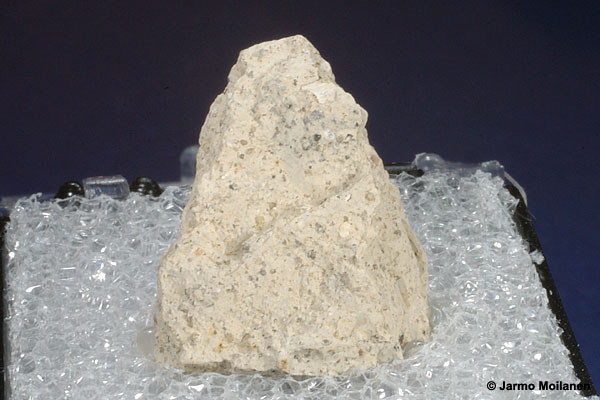
Ejecta is material ejected outside the crater that contains both shocked and unshocked material.
Sample: piece of ejecta from Cow Creek formation associated with the Manson impact structure in the USA. |
Ejected rocks |
|
| [image missing] |
When impact occurs, many rocks are ejected from the impact site. Some of these materials may be thrown into ballistic trajectories, and some may even briefly escape the upper atmosphere.
Sample: a carbonate rock from Chicxulub impact. This rock found in Belize probably went in ballistic trajectory (the rounded shape may be due to in atmospheric ablation). |
Tektites |
|
|
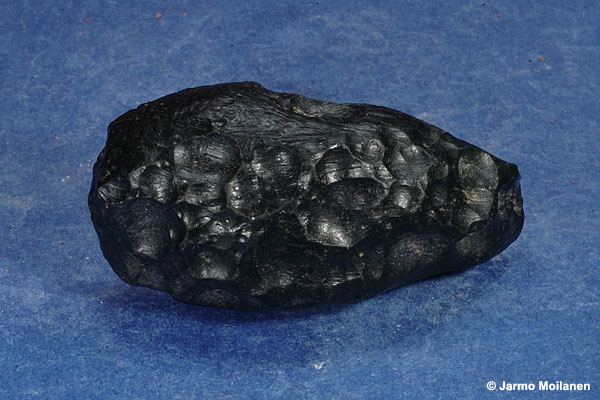
Tektites are almost pure silicate glass. They form during impact and they can be strewn over great distances.
Sample: a tektite from Thailand. No one has yet discovered the impact crater that produced these tektites. It may no longer exist, because of erosion. |
Distal ejecta |
|
|
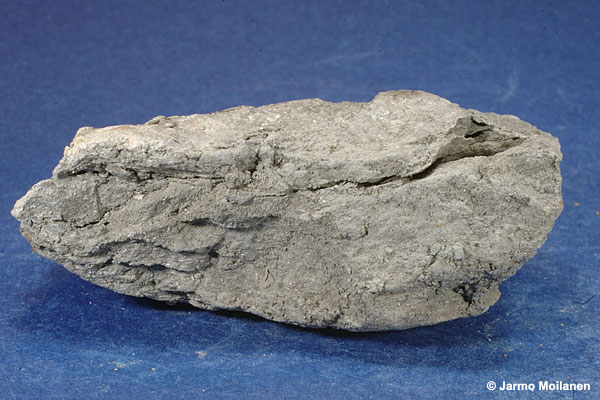
Distal ejecta contain shocked material and microtektites. It is usually found as a microtektite layer in geological strata. While several layers are known, not all of the impact structures have has not yet been identified. Some may no longer exist, because of erosion.
Sample: K/T boundary clay from Austria. This material formed when a huge asteroid hit the Earth 65 million years ago, resulting in mass extinction of dinosaurs and many other life forms. The impact occurred in Chicxulub, Mexico. The Chicxulub crater is about 180-km in diameter. Distal ejecta from it has been found all over the World. |
Resurge breccia |
|
|
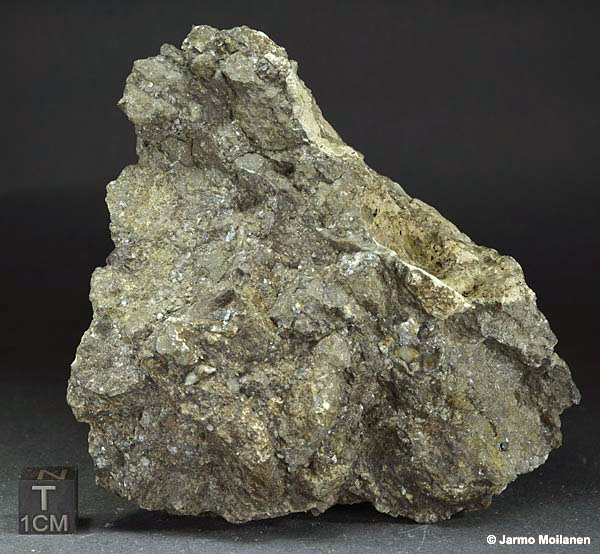
When an impact occurs in the ocean, the impact forces water away from the impact site. It may rush back to the site as a huge resurge waves.
Sample: Lockne resurge breccia from Lockne, Sweden. |
Shatter cones |
|
|
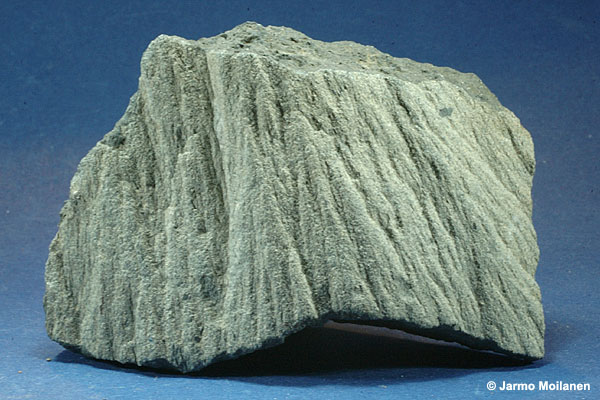
Shatter cones are formed when a intense shock wave travels through target rocks. Shatter cones points toward the center of the impact. Shatter cones are some of the best macroscopic evidence for an impact.
Sample: nice shatter cones in sandstone from Kara, Russia. |